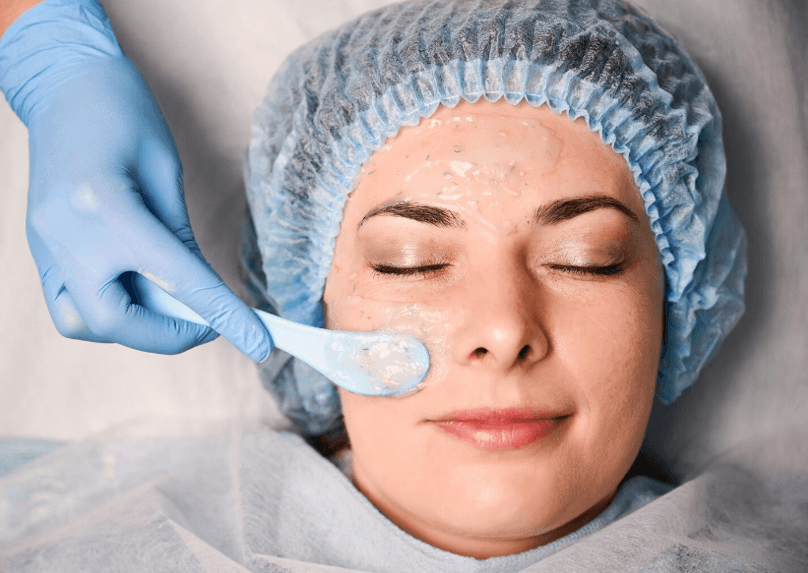
Skin rejuvenation has two versions. There’s the marketing one, all about glow, brightness, and a radiant complexion. Then there’s the biology one, which is messier and a lot more interesting. The biology version involves controlled injury. An inflammatory cascade. The body deliberately destroys damaged cells, so newer ones replace them. Healing that lays down new collagen because skin reads chemical exposure the same way it reads any other wound. The cosmetic result you see weeks later is the visible end of a process that started with what is, technically, a chemical burn. Nobody markets it that way, and nobody really has to.
Knowing the actual mechanism makes a lot of things make sense, why some peels work better than others on a given concern, why depth matters more than which acid the office uses. Why doesn’t a 30% glycolic kit you ordered online get the same results, even when the strength looks comparable on paper? A chemical peel in Garden City patients book at an actual medical office isn’t really about the acid. It’s about controlling depth and managing the healing response that follows. The acid is just how you get there.
Long Island has several places worth considering for this kind of work, and Zoyya Anti-Aging & Aesthetics is one of the Garden City offices that offer chemical peels patients can use without driving into Manhattan. None of what follows is a recommendation of any particular provider. It’s a walkthrough of what the science actually looks like, what your body is doing during recovery, and where treatment differences really sit.
How Skin Renews
Your skin replaces itself constantly. The outer layer (the stratum corneum) drops dead corneocytes and gets repopulated from below on roughly a 28-day cycle when you’re young. The dermis, where collagen and elastin live, turns over much more slowly and fades much more slowly.
Several things put the brakes on this. UV light breaks down collagen and elastin faster than the body can rebuild them. Hormonal shifts thin the dermis, especially during menopause, when estrogen levels drop. Cumulative inflammation from sun, pollution, and smoking takes apart the structural matrix piece by piece. Whatever was a 28-day renewal cycle in your twenties stretches out to 40 days or more by your fifties. Dead cells stick around. Pigment goes patchy. Lines deepen because the scaffolding underneath is thinner.
The National Institute on Aging maintains skin care and aging guidance that lays out the basic biology in plain language: collagen loss, elastin loss, slower turnover, and sun damage stacking up. Worth knowing because it’s the actual reason peels work in the first place. Your skin already knows how to regenerate. It’s just been doing it less efficiently for years. A peel doesn’t add anything new. It restarts machinery that was already there.
Depth Determines What you Fix
The American Society for Dermatologic Surgery’s chemical peels reference sorts peels into three categories. Superficial. Medium. Deep. The depth genuinely changes what conditions the treatment can address. Not a marketing distinction, a histological one.
Superficial peels stop at the epidermis. Glycolic, salicylic, lactic, low-strength TCA. They handle dullness, mild texture, surface pigment, and early acne. Recovery is one to five days of light flaking. Most skin types tolerate them. Stack a series over months, and the results add up.
Medium peels go through the epidermis into the upper papillary dermis. Usually 35-50% TCA; sometimes Jessner’s solution as a primer; sometimes both layered. They address moderate sun damage, melasma, fine-to-moderate wrinkles, and shallow acne scars. Recovery takes about a week to two weeks, with swelling, redness, visible peeling, and some crusting. Real results show up over four to eight weeks as collagen remodels.
Pigmentation is its Own Conversation.
Hyperpigmentation comes in different forms, and they don’t all respond the same way. Some pigment sits in the epidermis. Sun spots, post-acne marks, and much of the melasma. Peels effectively reduce epidermal pigmentation by removing pigmented cells, allowing newer melanin to distribute more evenly.
Other pigments sit in the dermis. Deeper melasma. Some medication-induced pigment. Trauma pigment. Peels alone struggle here. Combination protocols (peels plus topical hydroquinone, tretinoin, kojic acid, sometimes oral tranexamic acid) work better, and the timeline runs months, not weeks.
This is also where Fitzpatrick’s skin type really matters. The same peel that lifts pigment cleanly in lighter skin can trigger post-inflammatory hyperpigmentation in darker skin if the depth isn’t right. Mandelic and lactic acids are usually safer first picks. The provider’s experience with skin of color matters way more than the brand of peel they happen to use.
Collagen Takes Its Time
Patients sometimes expect dramatic improvement at the two-week mark. By then, the visible peeling has finished. Redness has settled. The surface looks brighter and feels smoother. Underneath the bigger changes, there are still changes happening, just on a slower timeline.
Fibroblasts in the dermis ramp up collagen production over four to twelve weeks after a medium peel. Skin texture continues to refine for months. This is also why a series of peels spaced four to six weeks apart often beats a single deeper peel: the collagen response stacks across multiple cycles.
See also: What to Expect When Visiting a Chiropractor in Boulder for Pain Relief and Wellness Care
What a Good Candidate Looks Like
Good candidates have a specific concern (e.g., texture, pigment, mild lines, acne scarring, or sun damage). Realistic expectations about recovery. Willingness to follow strict sun protection during healing. Skin is healthy enough to handle controlled inflammation without flaring. Patients on isotretinoin (Accutane) need to wait 6 to 12 months after stopping it. Patients with active herpes simplex need antiviral prophylaxis. Pregnant patients need to avoid certain agents. A real consultation covers all of this before anything gets applied to anyone’s face.
The science of rejuvenation isn’t magic, and it isn’t a marketing concept. It’s the deliberate, controlled use of your own healing biology to undo damage that has built up over the years. Done well, results show up gradually and last. Done poorly, neither of those things happens. The provider you pick is what determines which version you end up with.