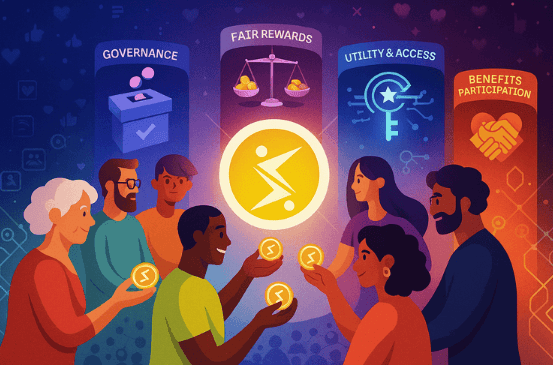
Tokenized communities reframe ownership, participation, and rights through digital tokens. Data-driven structures enable measurable engagement and direct accountability, while governance becomes more transparent and verifiable. Incentive alignment can channel resources toward shared outcomes, but friction rises with rule clarity, oversight, and potential manipulation. Institutions face trade-offs between inclusion and gatekeeping, efficiency and equity. The path forward hinges on robust design, risk management, and scalable governance models that can withstand misuse and unequal participation.
What Are Tokenized Communities and Why They Matter
Tokenized communities refer to social and economic networks organized around digital tokens that represent ownership, participation, or rights within a given ecosystem. They enable measurable participation and direct accountability, with token incentives shaping behavior and resource allocation. Such models can reduce centralized gatekeeping, yet governance friction may arise, requiring transparent rules, scalable oversight, and data-driven policy frameworks to sustain inclusive, freedom-aligned development.
How Tokenization Aligns Incentives With Common Goals
Tokenization can reframe incentives by tying individual actions to measurable outcomes, enabling resource flows and governance decisions to reflect collective priorities. Proponents argue token incentives foster transparent performance signals, aligning funding with progress and risk management with shared targets.
Empirical models suggest governance alignment improves efficiency, accountability, and resilience, while preserving autonomy. Policymaking should anticipate unintended effects and design safeguards that sustain freedom through adaptable, verifiable benchmarks.
Implementing Tokenized Governance in Real-World Groups
Implementing tokenized governance in real-world groups requires translating abstract incentives into concrete governance processes, governance metrics, and verifiable decision rights. Data on participation, withdrawal, and outcome efficiency informs policy refinements. Token incentives align stakeholder roles with measurable objectives, while governance design embeds transparent voting, auditing, and accountability. Realistic roadmaps enable scalable adoption, fostering resilience, freedom, and collaborative legitimacy across diverse organizations.
Risks, Trade-offs, and Pathways to Inclusive Adoption
The adoption of tokenized governance introduces a spectrum of risks and trade-offs that demand careful assessment: concentration of influence, equity of participation, and resilience to manipulation or fraud.
Empirical scrutiny highlights governance tokens’ uneven participation, potential capture by specialized actors, and vulnerability to collusion.
Pathways to inclusive adoption rely on transparent design, open data, and robust anti-abuse tooling within the token economy.
Frequently Asked Questions
How Do Tokenized Communities Handle Privacy and Data Ownership?
Tokenized communities implement privacy controls and governance transparency to protect member consent while tracking data ownership shifts; token economics influence dilution risk, with clear policies guiding data ownership, consent mechanisms, and accountability for maintaining data integrity and member rights.
What Are the Legal Implications Across Jurisdictions for Tokenized Groups?
“Legal implications vary by jurisdiction and require proactive risk mapping.” The analysis notes cross border licensing ideas, privacy governance, data ownership models, token governance, power dynamics, sustainable funding, dilution prevention, membership rights, voting mechanisms, and compliant cross-border operations.
How Do Tokens Influence Social Dynamics and Power Shifts?
Tokens influence social dynamics and power shifts by shaping incentives and perceived legitimacy. Token economics and governance signals guide participant behavior, concentration risks, and collaboration patterns, informing policy considerations for equitable access, transparency, and accountable, forward-looking governance structures.
Can Tokenization Replace Traditional Membership Dues and Governance Bodies?
Catalyst: tokenization governance cannot fully replace traditional governance; it reconfigures membership economics, shifting incentives while preserving accountability. Data-driven projections suggest tokenized dues complement, not supplant, institutions, enabling flexible, freedom-aligned governance with prudent risk controls and transparency.
See also:Data Recovery Techniques Explained
What Sustainability Models Ensure Long-Term Value Without Dilution?
Tokenized governance supports diversified funding and staggered token issuance, enabling value retention through revenue-backed reserves and adaptive staking models; sustainability rests on transparent dashboards, on-chain auditing, and governance flexibility that preserves member autonomy while reducing dilution risk.
Conclusion
Tokenized communities signal a carefully calibrated balance between openness and order. While incentive-aligned governance can broaden participation and resilience, it also invites nuanced risks around equity, transparency, and capture. Data-driven design and clear rule-based frameworks offer a path to scalable legitimacy, enabling measurable outcomes with verifiable accountability. If thoughtfully implemented, tokenized models can quietly strengthen democratic participation, invite prudent experimentation, and progressively harmonize interests—without sacrificing inclusivity or systemic trust.