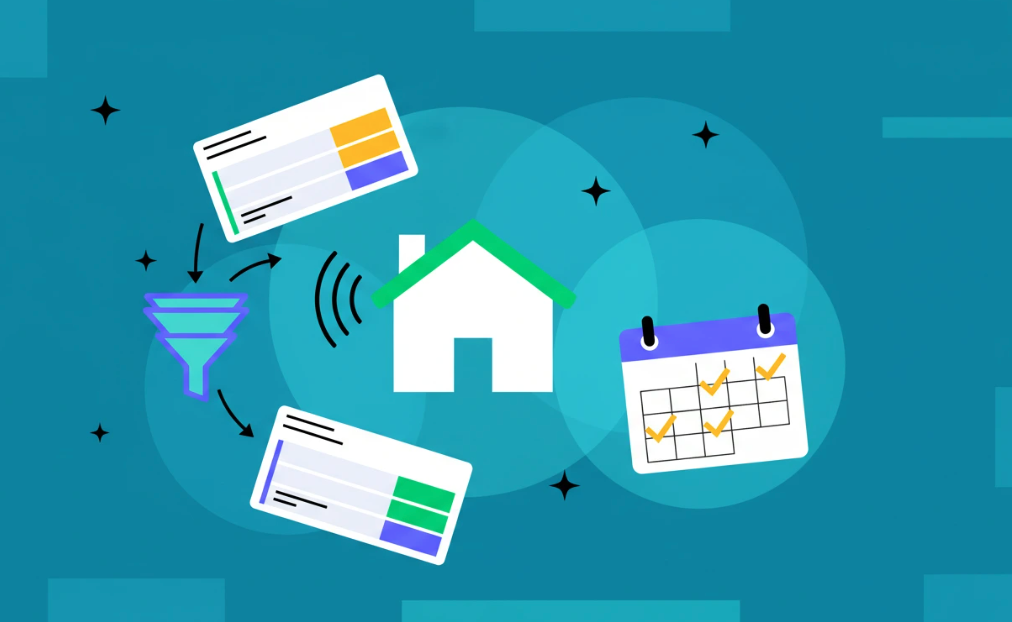
India’s real estate sector is in the middle of a digital transformation. RERA has brought greater process discipline. PropTech platforms have raised buyer expectations. And the sheer volume of leads generated by digital marketing has overwhelmed the capacity of traditional broker teams to respond, qualify, and nurture effectively.
AI voice agents are increasingly being adopted by Indian property brokers — from large developers’ sales teams to independent brokerage firms — to handle the parts of the sales process that don’t require human judgement but currently consume most of the team’s time.
Before you commit to a platform, here are 9 questions that will separate the solutions worth buying from the ones that will waste your time and budget. Choosing the right ai voice agent for real estate comes down to nine questions every broker should ask before buying.
1. Can It Handle Calls in Hindi, Regional Languages, and English Interchangeably?
Indian property buyers don’t all communicate in English — and many switch between languages mid-conversation. A buyer in Pune might ask a question in Marathi, switch to Hindi, and conclude in English. A buyer in Chennai may be comfortable only in Tamil.
An AI voice agent that is English-only — or that supports Hindi only as a secondary, limited capability — will fail a significant proportion of your inbound lead calls. Before evaluating any other feature, ask for a live demo in the languages that represent your buyer base.
2. How Does It Qualify Leads — and What Qualification Data Does It Capture?
Lead qualification is one of the highest-value applications for AI voice agents in Indian real estate. The question is how sophisticated the qualification logic is.
A basic system asks: “What is your budget?” and “Which area are you interested in?” A good system goes further: timeline to purchase, current living situation, financing status (pre-approved, exploring, cash buyer), decision-making authority, whether they’ve seen other properties, and what their primary criteria are.
Ask the vendor to show you exactly what data is captured from a qualification call and how it flows into your CRM.
3. Does It Integrate With Your Existing CRM and Property Management System?
An AI voice agent that doesn’t connect to your CRM is a dead end. Every call — qualified lead, unqualified lead, callback request, complaint — should generate a structured record in your CRM automatically.
Ask specifically about integrations with the tools you’re already using. In the Indian property market, common stacks include Salesforce, Zoho CRM, PropTiger’s internal systems, and custom-built CRMs. Native integration is faster and more reliable than middleware. Know which you’re getting.
4. Can It Handle Site Visit Scheduling and Confirmation?
Site visit scheduling is a high-volume, repetitive task that consumes significant broker time. An AI voice agent that can check availability, book a site visit slot, send a WhatsApp confirmation with the address and contact details, and send a reminder call the day before is delivering real, measurable productivity value.
Ask whether scheduling integration is native or requires a third-party calendar tool. Ask how it handles rescheduling and cancellations.
5. What Happens When a Lead Has a Query the AI Can’t Answer?
No AI voice agent can answer every question a property buyer might ask. What matters is what happens when it can’t.
The best systems recognise the boundaries of their knowledge and escalate gracefully — telling the caller that a human specialist will call them back within a defined timeframe, logging the specific query, and triggering an alert to the relevant team member. The worst systems keep trying to answer with irrelevant responses until the caller hangs up.
Ask the vendor to walk you through the escalation flow. Ask how unresolved queries are tracked and what the SLA is for human follow-up.
6. How Does It Handle Post-Site-Visit Follow-Up?
The period between a site visit and a purchase decision is where most deals are won or lost. An AI voice agent that can conduct structured follow-up calls — asking how the visit went, addressing concerns, sharing relevant project information, and gauging timeline — keeps the lead warm without consuming broker time on calls that don’t yet require human judgement.
Ask whether the follow-up flow is configurable to your sales process. Ask whether the AI can adjust its follow-up cadence based on lead score or stage.
7. What Does RERA Compliance Look Like in the Platform?
The Real Estate Regulatory Authority has created specific obligations around how developers and brokers communicate with buyers — particularly around project-related claims, pricing, and timelines. An AI voice agent making calls on behalf of your brokerage needs to operate within these constraints.
Ask the vendor whether the platform has been designed with RERA-compliant communication guidelines. Ask whether call recordings are stored for the mandatory compliance period. Ask whether the system can be configured to avoid making claims or representations that would constitute a RERA violation.
8. Can You See Real Performance Data — Not Just Demo Numbers?
Every vendor will show you impressive metrics from their best deployments. What you need is real data from deployments that are comparable to yours in scale, property segment, and geography.
Ask for 2–3 reference customers in the Indian real estate segment that you can speak to directly. Ask for anonymised performance data showing lead qualification rates, site visit conversion from AI-qualified leads, and cost-per-qualified-lead versus their previous process.
If a vendor can’t provide this, treat it as a significant risk signal.
9. What Does the Full Cost Look Like Over 12 Months?
AI voice agent pricing in India varies significantly in structure. Some platforms charge per minute of call time; others charge per qualified lead, per site visit booked, or flat monthly fees. The headline number rarely tells the full story.
Model out your expected call volume over 12 months — inbound lead response, outbound follow-up, site visit confirmation, post-visit follow-up — and get a total cost estimate from each vendor based on that volume. Include implementation cost, integration development if required, and ongoing support.
Then compare that total against your current cost of handling the same volume with human agents, including time cost and the leads you’re currently losing because response time is too slow.
The Bottom Line
The Indian property market is competitive enough that response time to a new lead — particularly one generated from a digital ad — is a primary driver of conversion. Research consistently shows that leads contacted within 5 minutes of enquiry convert at dramatically higher rates than those contacted 30–60 minutes later.
An AI voice agent that calls a new lead instantly, qualifies them in 3–4 minutes, and books a site visit — without a human broker being available — is not a nice-to-have. For high-volume Indian brokerages operating in competitive metro and Tier 1 markets, it’s infrastructure.
The 9 questions above will help you find the platform that can actually deliver that outcome for your business — rather than one that demonstrates well in a sales call but underdelivers in production.