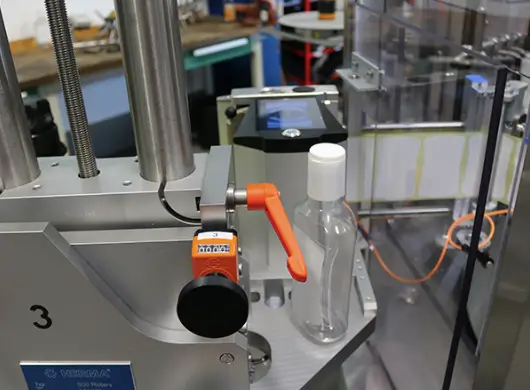
Consumer expectations are changing faster than ever before. Buyers no longer judge products only by their quality or price. Packaging has become an important part of the overall customer experience, influencing first impressions, purchasing decisions, and long-term brand loyalty. As businesses work to satisfy these growing expectations, manufacturers are investing in smarter production technologies that improve packaging quality without slowing operations. Among these technologies, the bottle labeling machine has become an essential part of modern manufacturing strategies because it supports greater consistency, flexibility, and operational efficiency.
Markets are becoming increasingly competitive, and companies are introducing new product variations more frequently than in the past. Seasonal packaging, promotional campaigns, limited-edition designs, and customized branding require production systems that can adapt quickly. Traditional production methods often struggle to keep pace with these demands, encouraging manufacturers to adopt more advanced labeling technologies that simplify changeovers while maintaining accuracy.
Meeting customer expectations today requires more than producing high-quality products. It also requires delivering attractive packaging, reliable product information, and consistent presentation across every unit that reaches retailers and consumers.
Modern Consumers Expect More Than Attractive Packaging
Today’s customers pay attention to details that previously received little consideration. They compare product appearance, branding consistency, label readability, and packaging quality before making purchasing decisions.
Professional packaging communicates reliability. Products with clearly positioned labels and consistent presentation often create stronger confidence because they reflect careful manufacturing practices.
As competition continues increasing, packaging has become a silent representative of product quality long before customers experience the product itself.
The Rise of Product Customization
One major trend influencing manufacturing is product customization.
Many businesses now offer multiple flavors, fragrances, formulations, package sizes, and limited-edition collections throughout the year. Instead of producing a few standard products, manufacturers often manage dozens of packaging variations simultaneously.
This growing diversity creates additional challenges for production teams because packaging systems must adapt quickly without reducing efficiency or accuracy.
Flexible manufacturing has therefore become an important competitive advantage.
Faster Product Launches Require Better Packaging Systems
Product development cycles continue becoming shorter across many industries.
Companies frequently introduce new products to respond to changing consumer preferences, seasonal trends, and market opportunities. Faster product launches require packaging operations that can adjust efficiently without lengthy production interruptions.
Businesses that reduce setup time between packaging formats often gain greater flexibility when responding to customer demand.
This ability allows manufacturers to remain competitive while introducing new products more frequently.
Packaging Consistency Strengthens Brand Recognition
Successful brands build recognition through consistency.
Regardless of where products are purchased, customers expect packaging to look identical across every production batch. Consistent presentation reinforces professionalism and helps create stronger brand identity.
Small inconsistencies may appear insignificant during manufacturing, but customers often notice packaging differences when products appear together on retail shelves.
Maintaining consistency therefore supports both operational quality and marketing objectives.
Improving Operational Agility
Manufacturing environments rarely remain unchanged for long periods.
Production schedules shift, customer orders fluctuate, and market conditions evolve continuously. Businesses need production systems capable of adapting quickly without requiring major operational changes.
Operational agility allows manufacturers to respond efficiently while maintaining productivity and product quality.
Companies increasingly prioritize equipment that supports long-term flexibility rather than only short-term production capacity.
See also: Why Every Fast-Growing Real Estate Brand Eventually Faces Online Criticism
Supporting Businesses During Growth
Growing businesses experience changing production requirements.
A packaging process suitable for small production volumes may become inefficient as demand increases. Manufacturers therefore seek technologies that can support expansion without disrupting existing operations.
Scalable production systems reduce the need for complete equipment replacement while providing businesses with greater confidence during periods of growth.
Long-term planning has become an important consideration when evaluating manufacturing investments.
Better Workflow Creates Better Results
Efficient production depends on coordination between multiple operational stages.
When packaging workflows remain organized, products move more smoothly from filling and inspection through labeling, packing, and distribution.
Improved workflow reduces unnecessary waiting time, minimizes manual handling, and supports better production scheduling.
Manufacturers increasingly recognize that operational efficiency depends upon how well individual processes work together rather than how quickly individual machines operate independently.
Data Is Becoming Part of Packaging Decisions
Digital manufacturing has introduced new opportunities for improving production performance.
Modern production facilities increasingly collect operational data that helps managers evaluate efficiency, identify recurring issues, and improve maintenance planning.
Instead of relying entirely on visual inspections, businesses can use performance information to guide production improvements and reduce unexpected downtime.
This data-driven approach encourages continuous improvement throughout manufacturing operations.
Meeting Retail Expectations
Retail environments have also changed significantly.
Large retailers expect suppliers to maintain consistent packaging quality because shelf presentation influences customer experience.
Products arriving with damaged, inconsistent, or poorly positioned labels may require additional handling or fail internal quality inspections before reaching store shelves.
Reliable packaging processes therefore benefit both manufacturers and retail partners.
Innovation Beyond Speed
Many people associate manufacturing innovation only with faster production.
In reality, today’s innovation focuses equally on flexibility, quality, sustainability, operational reliability, and long-term efficiency.
Businesses increasingly value technologies that simplify production planning, improve packaging consistency, reduce waste, and support changing customer expectations.
This broader perspective explains why packaging continues receiving greater attention as part of overall manufacturing strategy.
Looking Ahead
Consumer expectations will continue evolving as markets become more dynamic.
Manufacturers that remain successful will likely be those capable of adapting quickly while maintaining consistent quality across every product they deliver.
Future production systems will emphasize intelligent automation, connected manufacturing, efficient resource management, and greater operational flexibility.
Businesses that prepare today will be better positioned to respond confidently to tomorrow’s market demands.
Final Thoughts
Packaging has become much more than a finishing process. It now plays an important role in shaping customer confidence, strengthening brand recognition, supporting retail requirements, and improving manufacturing efficiency. Companies that invest in adaptable production technologies are better equipped to respond to changing consumer expectations while maintaining consistent operational performance.
As manufacturing continues evolving, the bottle labeling machine will remain an important part of this transformation. Its ability to support accuracy, flexibility, workflow efficiency, and scalable production makes it a valuable technology for businesses seeking long-term growth in increasingly competitive markets.