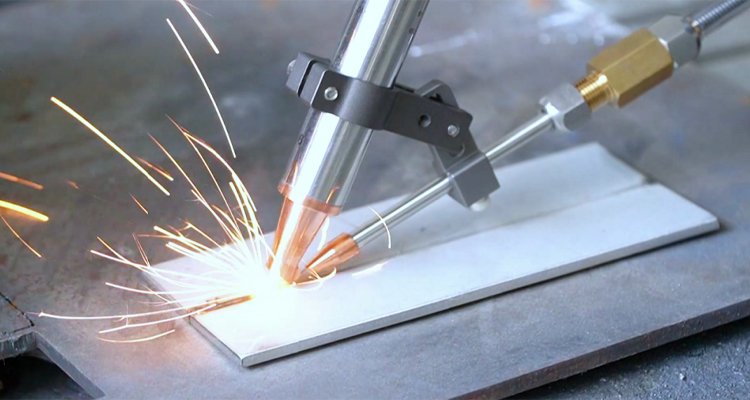
Manufacturing is undergoing one of the most significant transformations in its history. Advances in automation, artificial intelligence, industrial connectivity, and digital engineering are changing how factories operate and how products move from design to final production. Smart manufacturing is no longer a concept reserved for large industrial corporations. It is becoming an essential strategy for businesses seeking greater efficiency, flexibility, and long-term competitiveness. Within this evolving landscape, the laser welding machine manufacturer is contributing through continuous research that supports the development of more intelligent production systems.
Research has become the foundation of industrial progress. Manufacturers invest heavily in engineering studies, material testing, software development, automation technologies, and production optimization to meet the growing expectations of modern industries. These research efforts influence not only the capabilities of individual machines but also the broader manufacturing ecosystem in which they operate.
As production environments become increasingly connected, research-driven innovation will continue shaping how factories improve productivity, maintain quality, and prepare for future technological advancements.
Research Has Become the Engine of Industrial Innovation
Industrial progress rarely occurs through isolated technological breakthroughs.
Most manufacturing improvements are the result of continuous engineering research that evaluates production challenges, tests new solutions, and refines existing technologies over time.
Research allows manufacturers to identify opportunities for improving precision, operational stability, energy efficiency, and system integration before new technologies reach commercial production.
This systematic approach creates more reliable innovations while reducing uncertainty during implementation.
Smart Manufacturing Depends on Continuous Learning
Modern production facilities generate enormous amounts of operational information.
Engineering teams analyze production performance, equipment reliability, workflow efficiency, and maintenance trends to identify areas for improvement.
Continuous learning allows manufacturers to refine production strategies while developing technologies that better address evolving industrial requirements.
Research therefore extends beyond laboratories and becomes an ongoing part of daily manufacturing operations.
Engineering Development Improves Production Intelligence
Smart manufacturing relies on equipment capable of supporting intelligent decision-making.
Engineering research contributes by improving automation, monitoring capabilities, production communication, and operational adaptability.
Rather than functioning independently, manufacturing systems increasingly exchange information that helps optimize production across multiple stages.
This integration improves efficiency while reducing unnecessary production interruptions.
Material Research Expands Manufacturing Possibilities
Industrial materials continue evolving alongside production technologies.
Manufacturers work with lightweight alloys, advanced composites, specialized stainless steels, and high-performance metals that require increasingly sophisticated joining methods.
Research helps engineers understand how different materials respond under varying production conditions, leading to better manufacturing solutions.
Material science therefore remains closely connected to future production innovation.
Automation Is Becoming More Adaptive
Traditional automation focused on repeating fixed production processes.
Modern manufacturing requires systems capable of adapting to changing production schedules, varying product specifications, and customized manufacturing requirements.
Research supports this evolution by developing technologies that improve flexibility without sacrificing precision or operational consistency.
Adaptive automation enables businesses to respond more effectively to dynamic market conditions.
See also: Why Bottle Labeling Machine Efficiency Plays a Critical Role in Building Scalable Packaging Systems
Digital Connectivity Enhances Manufacturing Performance
Connected manufacturing environments improve communication between production equipment, quality control systems, maintenance planning, and operational management.
Research into industrial connectivity allows manufacturers to develop smarter production environments where equipment shares information that supports better decision-making.
Greater connectivity reduces production bottlenecks while improving workflow coordination throughout manufacturing facilities.
Digital integration has become one of the defining characteristics of smart manufacturing.
Research Strengthens Quality Management
Quality assurance has evolved from simple product inspection into a continuous manufacturing process.
Engineering research focuses on preventing production inconsistencies before they affect finished products rather than identifying defects after manufacturing has been completed.
This proactive approach improves operational reliability while reducing material waste and production costs.
Consistent quality supports stronger customer confidence across every manufacturing sector.
Sustainability Drives Future Engineering Research
Environmental responsibility has become an important objective for industrial research programs.
Manufacturers seek production technologies that improve energy efficiency, optimize material utilization, reduce emissions, and minimize operational waste.
Research supports these goals by identifying practical engineering improvements that contribute to both environmental sustainability and business profitability.
Future manufacturing innovation will increasingly balance productivity with responsible resource management.
Collaboration Accelerates Technological Progress
Research rarely succeeds in isolation.
Engineering teams, production specialists, software developers, automation experts, and industrial customers often work together to develop practical manufacturing solutions.
Collaborative innovation ensures that new technologies address real production challenges while remaining suitable for commercial manufacturing environments.
Strong partnerships accelerate technological progress across the entire industrial sector.
Preparing Industries for the Future
Manufacturing will continue evolving as technologies such as artificial intelligence, machine learning, digital twins, predictive maintenance, and advanced robotics become more widely adopted.
Research conducted today provides the knowledge required to integrate these technologies into future production systems.
Businesses investing in research-driven innovation position themselves to adapt more successfully to future industrial developments while maintaining operational competitiveness.
Forward-looking engineering creates resilience in an increasingly dynamic manufacturing landscape.
Final Thoughts
The future of smart manufacturing depends on continuous research that transforms engineering ideas into practical industrial solutions. Modern production facilities require technologies capable of improving efficiency, supporting intelligent automation, maintaining exceptional quality, and adapting to changing manufacturing requirements. Research provides the foundation that makes these advancements possible.
As manufacturing continues embracing digital transformation, the laser welding machine manufacturer will play an increasingly important role through engineering research and technological development. By driving innovation in automation, materials, connectivity, and production intelligence, manufacturers are helping build the next generation of smart manufacturing systems designed for long-term industrial success.