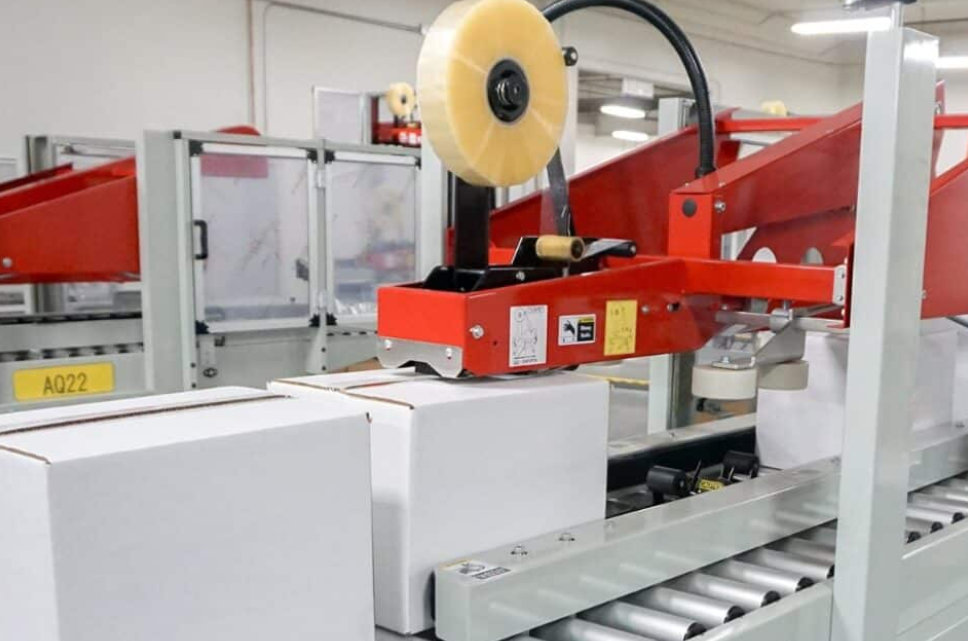
The manufacturing industry is moving toward a future defined by automation, connectivity, and intelligent decision-making. Factories around the world are adopting advanced technologies to improve productivity, reduce operational challenges, and create more flexible production environments. Packaging, which was once considered a simple final step in manufacturing, has now become an important part of smart factory development. Businesses are investing in modern solutions that improve efficiency, maintain quality, and support the growing demands of global supply chains. Within this transformation, the automatic case sealer is becoming an essential technology for companies building smarter and more efficient packaging operations.
Smart factories are not only focused on increasing production speed. They are designed to create connected systems where machines, software, and operational data work together to improve overall performance. Packaging automation plays an important role in this process because it directly influences product handling, transportation efficiency, and supply chain reliability.
As industries continue adopting Industry 4.0 principles, automated packaging technologies are helping businesses create more organized, responsive, and future-ready manufacturing environments.
The Rise of Smart Factory Development
Smart factories represent a major shift in how industrial operations are managed.
Traditional manufacturing systems often depended on manual monitoring and separate processes. Modern factories are becoming more connected, allowing different stages of production to communicate and work together more effectively.
Automation, data analysis, and intelligent systems are helping businesses improve efficiency while reducing unnecessary delays.
Packaging operations are becoming a key part of this transformation because they connect production activities with distribution processes.
Why Packaging Automation Matters
Packaging directly affects the speed and reliability of supply chains.
A manufacturing process can produce high-quality products, but inefficient packaging can create delays and increase operational costs.
Automated packaging solutions help businesses maintain smoother workflows by improving consistency and reducing repetitive manual activities.
This makes packaging automation an important investment for companies seeking better overall performance.
See also: From Delaware to Delhi: A Step-by-Step Guide to Business Setup in India for US-Based Companies
Supporting Industry 4.0 Manufacturing Goals
Industry 4.0 focuses on creating more intelligent and connected production environments.
Factories are integrating sensors, automation systems, robotics, and digital platforms to improve visibility and control.
Automated packaging technologies support these goals by becoming part of connected production lines.
When packaging systems work together with other factory operations, businesses can achieve better coordination and improved efficiency.
Improving Production Speed and Accuracy
Modern businesses face increasing pressure to deliver products faster while maintaining quality.
Manual packaging processes may create limitations when production volumes increase.
Automated systems help maintain consistent performance by completing repetitive tasks with greater accuracy and reliability.
Improved speed and precision allow manufacturers to meet customer expectations while maintaining operational stability.
Data-Driven Packaging Operations
Data has become one of the most valuable resources in smart manufacturing.
Connected systems allow businesses to collect information about production performance, equipment efficiency, and operational challenges.
This information helps companies identify opportunities for improvement and make better decisions.
Data-driven packaging operations support continuous improvement and stronger production management.
Reducing Operational Challenges
Every manufacturing business aims to reduce unnecessary costs and interruptions.
Packaging issues can affect production schedules, inventory management, and delivery performance.
Automation helps minimize common challenges by creating standardized processes and improving workflow organization.
A more predictable packaging operation allows businesses to manage resources more effectively.
Supporting Multiple Industries
Smart packaging technologies are valuable across many industries.
Manufacturers in food and beverage, electronics, pharmaceuticals, consumer goods, and industrial products all require reliable packaging systems.
Each industry has different requirements, but all benefit from improved efficiency, consistency, and product protection.
Flexible automation solutions allow businesses to adapt packaging processes according to their specific needs.
Creating More Efficient Work Environments
Automation changes how employees interact with manufacturing processes.
Instead of spending significant time on repetitive tasks, workers can focus on quality management, maintenance, planning, and other important responsibilities.
This improves workplace efficiency while creating better use of human skills alongside advanced technology.
Smart factories combine automation with human expertise to achieve stronger results.
Supporting Sustainable Manufacturing
Sustainability has become an important part of modern factory development.
Businesses are looking for ways to reduce waste, improve resource usage, and create more environmentally responsible operations.
Efficient packaging systems can contribute to these goals by reducing unnecessary material usage and improving workflow performance.
Future factories will increasingly combine productivity with sustainable practices.
The Future of Intelligent Packaging Systems
Packaging technology will continue evolving as factories become smarter.
Future systems are expected to include advanced monitoring, artificial intelligence, predictive maintenance, and deeper integration with supply chain platforms.
These developments will help businesses create packaging operations that are faster, more flexible, and easier to manage.
Companies adopting intelligent packaging solutions today will be better prepared for future industrial changes.
Building Competitive Advantages Through Automation
In modern markets, efficiency has become a major competitive factor.
Businesses that improve their production and packaging processes can respond more effectively to customer demands and market changes.
Automation provides companies with the ability to scale operations while maintaining consistent quality.
This creates long-term advantages in increasingly competitive industries.
Preparing for the Future of Manufacturing
The future of manufacturing will depend on connected systems, intelligent automation, and continuous improvement.
Packaging will remain a critical part of this evolution because it influences the final stages of production and distribution.
Companies that invest in advanced packaging technologies are creating stronger foundations for future growth.
Final Thoughts
Smart factories are transforming industrial operations by combining automation, digital technology, and intelligent management systems. Packaging has become an important part of this transformation because it directly affects efficiency, product protection, and supply chain performance. Businesses are increasingly adopting advanced solutions to create more reliable and flexible manufacturing environments.
The growing adoption of the automatic case sealer reflects the shift toward smarter packaging operations. By improving consistency, supporting automation integration, reducing operational challenges, and contributing to efficient workflows, this technology is helping businesses move closer to the future of intelligent manufacturing.